Escape room at home gifts: how to choose a game
Choose an escape room at home gift by the recipient’s age, interests and available time. Down the Rabbit Hole is a gentler first box for ages 12+. The Fifth Column is a wartime thriller for ages 14+ who want a longer evening. Both work solo or with up to six players, and the materials can be passed on after play. Below are the details, plus other publishers’ options for younger children and whodunit fans.

Our games appear alongside alternatives from other publishers. Player counts and age ratings will help you narrow the choice; use the linked product pages for current availability.
How to choose an at-home escape room game as a gift
You don’t need to know every game they own to make a useful shortlist. Start with how they like to spend an evening and who will join them.
How many people will play?
Think about who is likely to play, rather than the size of the household. Someone may want to solve alone even if they live with other people. Check that the game supports that number comfortably.
In a group, separate materials give people different things to examine. A game with a single sheet or board may need more sharing. Our puzzle design guide explains that difference, and our boxed games support 1 to 6 players.
Stay within the publisher’s player range. If six people are likely to join, choose a game that allows six or plan to use more than one copy.
A couple and a family want different boxes
Look at reading demands and age ratings as well as player count.
Two adults can choose a longer game if they want to give it the evening. For a family, use the youngest player’s age as a starting point and check how much reading the game requires. A game with natural stopping points is useful if sessions might end early.
Our two-part boxed games are rated 14+. Down the Rabbit Hole is rated 12+, the youngest rating in our range. If you’re buying for younger children, the options from other publishers below are a better place to start.
How much time do they really have?
Check both total playtime and the points where the game lets you stop. Most of our boxed games take 2 to 4+ hours across two parts, so you can pause between them. Down the Rabbit Hole takes 1.5 to 3+ hours in one part. You can pause during that game too, but it has no separate second part.
Read reviews for comments about pacing and hints. A longer estimate can mean more puzzles to enjoy or more time spent stuck; the total alone won’t tell you which experience the recipient will have.
Have they played one of these before?
For a first game, look for a manageable playtime and hints that offer a nudge before revealing the answer. A box advertised as the hardest in its range is usually a less useful starting point.
For someone who already enjoys boxed games, a connected series can be a good gift. Check which titles they’ve finished before buying. If the format is new to you, our guide to how at-home escape room games work explains what the recipient will do at the table.
Can they pass the game on after playing?
Check whether the puzzles require cutting, tearing or writing on the components. That affects whether another person can use the game afterwards.
Standard EXIT: The Game boxes are single-use. The publisher says that The Professor’s Last Riddle may require marking, folding or tearing components, and it lists the advent calendar edition as single-use too. That gives the puzzles more ways to use their materials, but it matters if the recipient likes to lend finished games to friends.
Unsolved Case Files explains in its FAQ that a case loses its surprises once you know the answer. It also says you may be able to pass a file to another player if you take care of the pieces and reassemble them as they were.
Solving the same puzzles again will feel different once you know the answers. Our boxed games don’t require cutting or writing on the materials, so you can keep them intact and repack them for someone else.
If the recipient enjoys sharing games, that ability to pass it on may help you choose between boxes.
Down the Rabbit Hole is our shorter physical box: it plays with 1 to 6 people, is rated 12+, and takes 1.5 to 3+ hours in one part. It has 4.9 stars from 82 reviews. Susan wrote: “Gave this as a gift. She loved it, and now I want one!” See what is inside the Down the Rabbit Hole box.
How big a gift should you buy?
Choose the size of gift by how much time the recipient wants to spend playing. Current prices are on the product pages.
| Size of gift | What it buys | Good for |
|---|---|---|
| A first try | Mission: Elfpossible is our digital holiday game for ages 14+, delivered by email. A standalone EXIT game is another option; choose by the age and difficulty printed on the specific box. | A first try at the format. Check whether they prefer a digital game or physical clues, and whether a single-use game will suit them. |
| A single-part game | Down the Rabbit Hole is a single-part Wonderland game. Hunt A Killer’s Death at the Dive Bar is another self-contained case to compare. | Down the Rabbit Hole takes 1.5 to 3+ hours; Death at the Dive Bar lists 45 to 60 minutes. Choose by the recipient’s time and interests. |
| A two-part game | Our two-part boxes include Blackbrim: 1876, La Famiglia, The Fifth Column, Cryptid and Synapse. Each plays with 1 to 6 people, is rated 14+, and takes 2 to 4+ hours. | Someone who wants a longer adventure. Start a trilogy with Blackbrim: 1876 or La Famiglia; the later games continue their stories. |
| Several evenings | Either trilogy, with three connected games and 10+ hours across six parts. The Synapse and Down the Rabbit Hole bundle pairs two different settings. | A gift meant to last several evenings, or a household that will work through it slowly. |
If the game is going straight to the recipient, check the gift details before ordering. Shipping costs and delivery windows are on our shipping page and at checkout.
For physical games, orders generally leave one business day after ordering. Standard shipping to the contiguous US takes a further three to seven business days; expedited shipping is two to four. Hawaii, Alaska and Puerto Rico take one to three weeks. If a date matters, contact us before ordering so we can help you assess the timing.
Mission: Elfpossible is our digital holiday game for ages 14+, sent by email. Santa has been captured, and players help rescue him using a laptop or desktop computer. Buy it with your own email if you want to forward it as a gift, and include the getting started guide. A gift card is another emailed option if you’d rather let the recipient choose.
For a Christmas gift, compare the seasonal options in our guide to Christmas escape room games at home.
When another company's game is the better present
Two preferences point toward other publishers: a younger family audience, or a game centered on identifying a murderer.
For a family with younger children, start with the age guidance. Finders Seekers recommends 1 to 8 players and ages 10+ with adult help; its adventures avoid murders and violence. Our gentlest physical game, Down the Rabbit Hole, is rated 12+, while Mission: Elfpossible and the rest of our boxes are rated 14+. The holiday setting alone doesn’t make Elfpossible a young children’s game.
If the recipient enjoys witness statements and identifying a culprit, consider Hunt A Killer. Death at the Dive Bar lists 1 to 5 players, ages 14+, and 45 to 60 minutes. Our games like Hunt A Killer guide compares the formats in more detail.
If you know the person likes puzzles but are unsure about a boxed game, our guide to gifts for puzzle lovers covers wooden jigsaws, crossword books, speedcubes and mechanical puzzle boxes too.
If you want a compact physical game, browse the EXIT range and check the title’s age rating. If a digital holiday adventure suits the recipient, consider Mission: Elfpossible.
Our comparison of the best at-home escape room games will help you match a box to the recipient's preferred kind of puzzle solving.
The best at-home escape room games to give as a gift
These options cover a first game, a longer adventure and a connected series. Check the product pages for current availability.

Down the Rabbit Hole plays with 1 to 6 people, ages 12+, in 1.5 to 3+ hours. You’re finding a way out of Wonderland, with gentler puzzles and a single part. It has 4.9 stars from 82 reviews and is a useful starting point for someone new to the format.
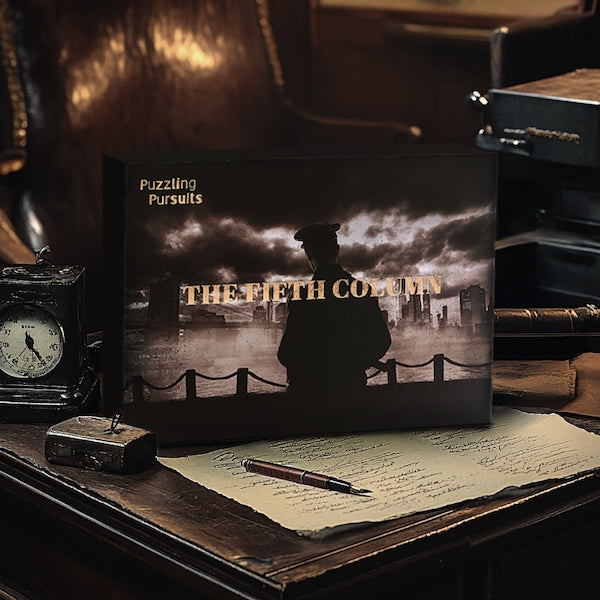
The Fifth Column plays with 1 to 6 people, ages 14+, over 2 to 4+ hours across two parts. You’re in Manhattan in June 1945, working to stop a Nazi plot after Germany’s surrender. Choose it for someone who likes codebreaking with a wartime story. It has 4.9 stars from 152 reviews.

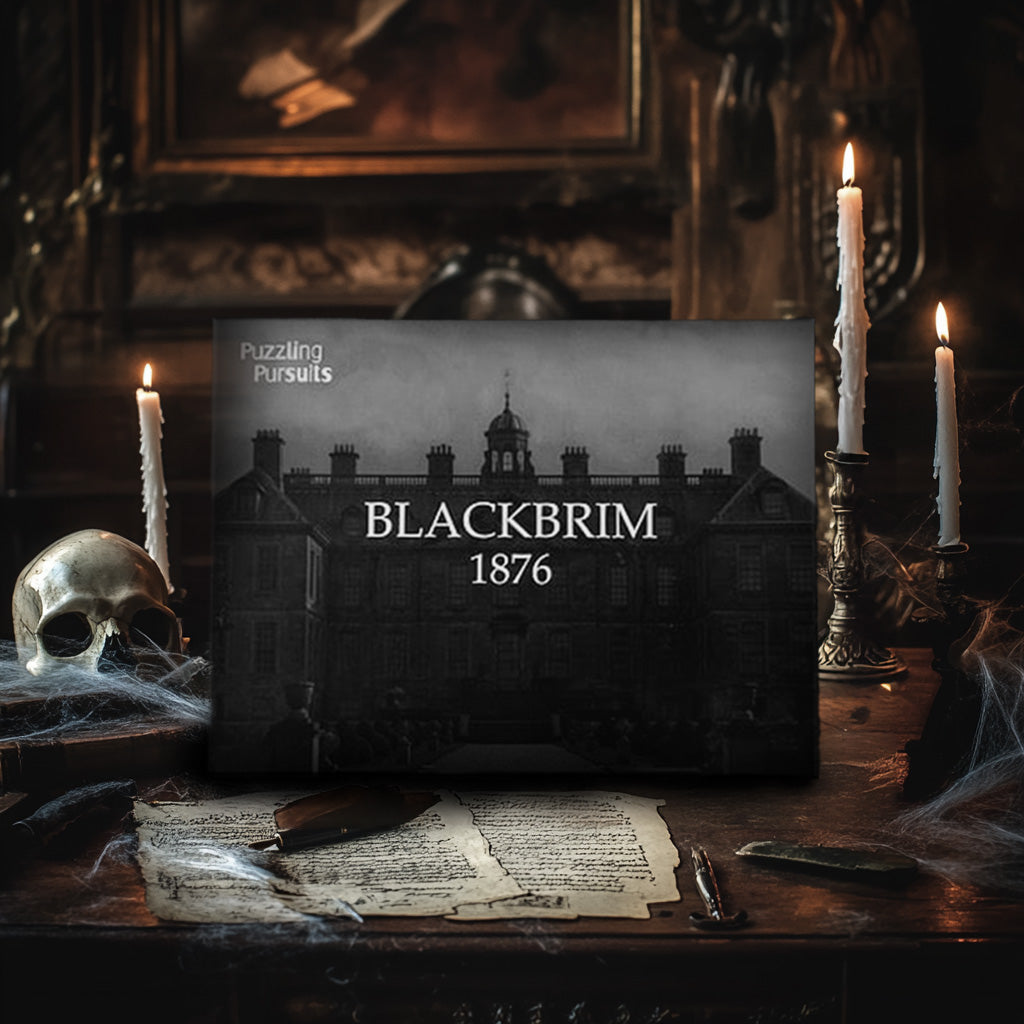
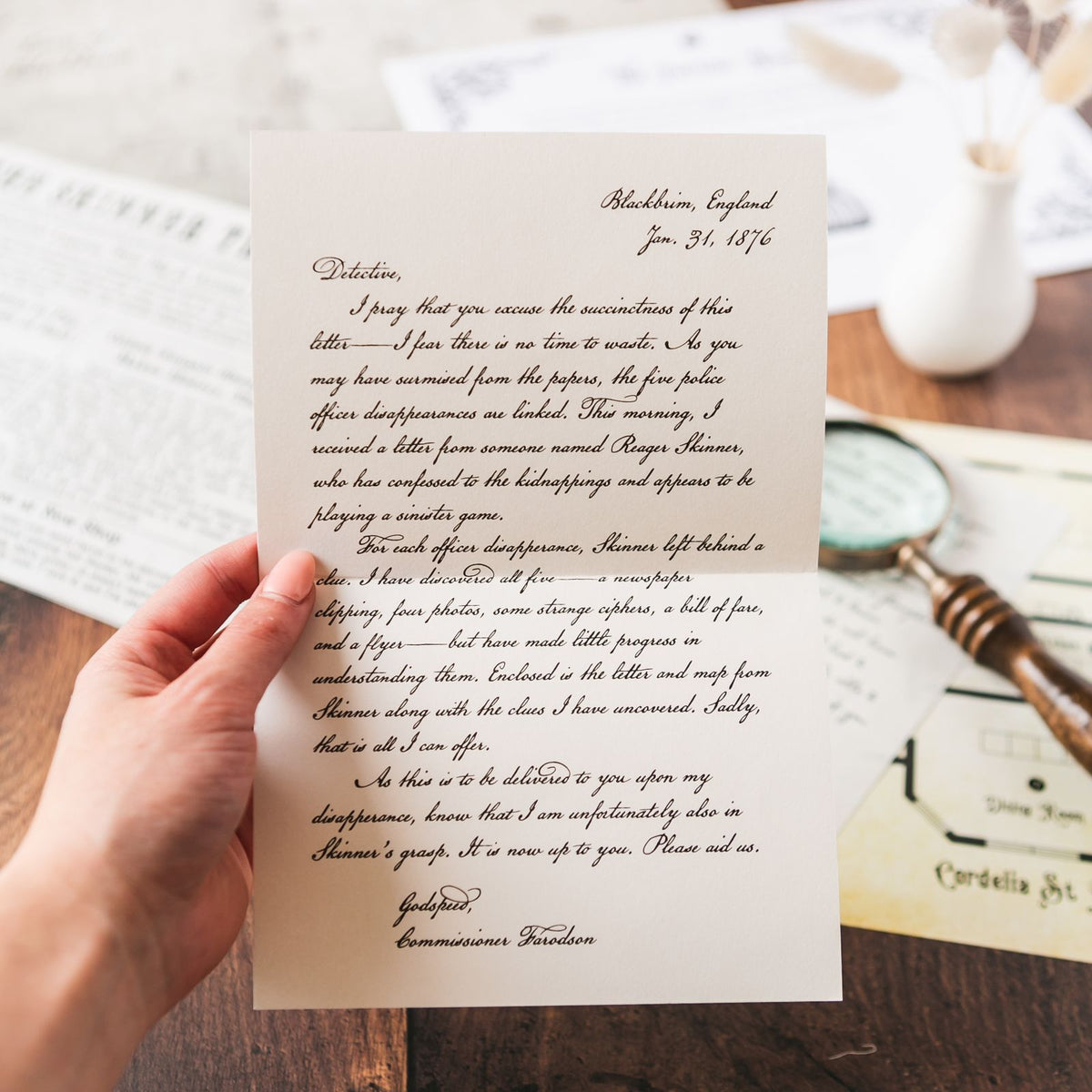
Blackbrim: 1876 follows private detective work in Victorian England, on the trail of a criminal named Reager Skinner. It plays with 1 to 6 people, is rated 14+, and takes 2 to 4+ hours across two parts. It has 4.8 stars from 524 reviews. Bonnie W. wrote: “I got it as a Christmas gift for my husband and he absolutely loved it! He loves puzzles and escape rooms so it was a perfect gift.”

The Synapse and Down the Rabbit Hole bundle pairs a science-fiction game with a Wonderland escape. Synapse is rated 14+ and Down the Rabbit Hole 12+, so a recipient playing both should be 14+. Check the product page for the bundle’s current availability.

The Blackbrim Trilogy follows one manhunt across three games and six parts. It plays with 1 to 6 people, is rated 14+, and offers 10+ hours of play, with 4.9 stars from 533 reviews. Choose it for someone who wants a connected story to work through over several evenings, and check whether they already own the first game.
None of the five quite right? All our boxed games sit on one page, and there is a gift card for when you have run out of time or would rather let them choose for themselves.
For someone who enjoys a wartime thriller, see what comes in The Fifth Column. It has 4.9 stars from 152 reviews. Heather F. wrote: “This is the second year I give the game as a gift. My friends love it!”
To try a puzzle before choosing a gift, visit the free Puzzle Archive. It has fifteen browser puzzles with optional hints and answer checking. The separate free printable escape room puzzles guide is useful if you’d like something on paper to include with a card.
Questions we get from people buying a game as a gift
These details are useful when the person buying the box won’t be the one playing it.
Is an at-home escape room game a good gift for someone who has never played one?
Yes. A manageable playtime and optional hints make a first box easier to approach. Down the Rabbit Hole is our gentlest boxed game and takes 1.5 to 3+ hours. There’s no timer, so a beginner can take hints or pause without worrying about running out of time.
Can the game be played again or passed on after it is finished?
Knowing the answers changes a second play. Whether another person can use the game depends on what happens to the components. Our puzzles require no cutting or writing on the materials, so the box can be repacked for a new player. Standard EXIT games are single-use; Unsolved Case Files says you may be able to pass a case on if you keep the pieces in good condition and reassemble them.
Does the person opening it need anything besides the box?
For our physical boxes, they’ll need a pencil, a table and an internet-connected phone or laptop. The printed materials are included, so no printer is needed. Our online companion guide provides hints, answer checking and story content; some puzzles also use the internet.
How long does an at-home escape room game take?
Most of our boxed games take 2 to 4+ hours across two parts, with a natural place to pause between them. Down the Rabbit Hole takes 1.5 to 3+ hours in one part. Either trilogy provides 10+ hours across six parts, so it suits someone who wants several evenings of play.
What if they get stuck?
Optional hints come in stages, so the player can take a small nudge before revealing more. The guide is free, and there’s no timer. They can pause and return to the game when they want.
Will the person opening it see how much it cost?
For a physical gift sent straight to someone else, contact us if you need to confirm what paperwork is included. For Mission: Elfpossible, use your own email at checkout and forward the game email and getting-started instructions to the recipient.