How to set up an escape room in your living room
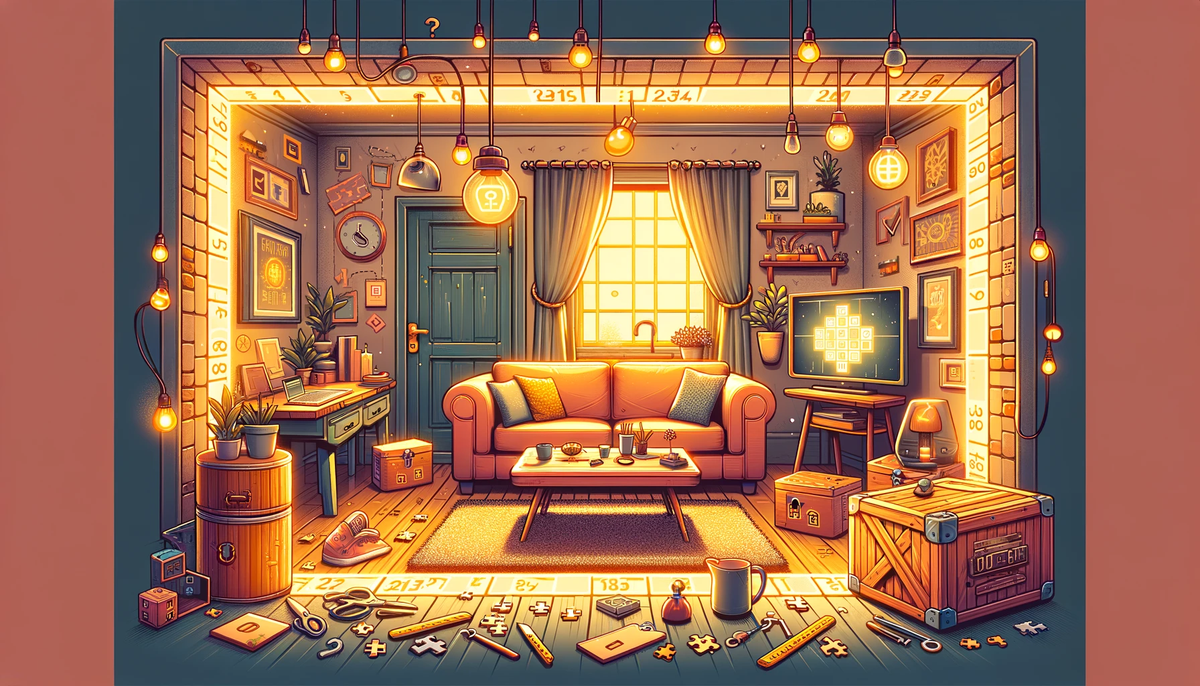
A living room escape game needs a clear goal and somewhere to spread out the clues. You can use a boxed game if you want to solve alongside your guests, or make your own if you enjoy planning surprises for them. A few details will help either version feel like an occasion.
Choose a story everyone can get into
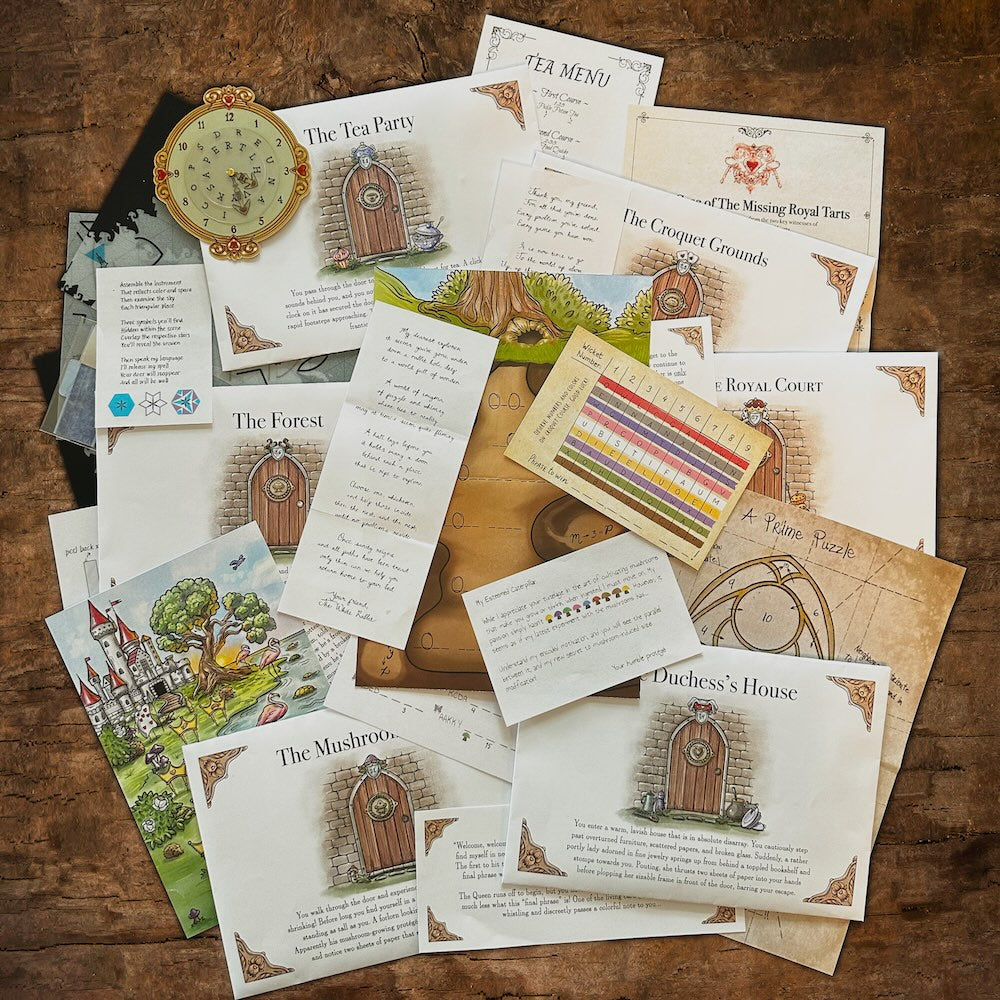
Give the players a reason to start looking. A missing explorer might have left a coded note, or a locked box might hold the way out of Wonderland. Keep the opening brief enough to read aloud before you hand over the first clue.
If you're making the game yourself, choose a setting that works with what you have. A desk and some envelopes can become a detective's office. A bookshelf can hide a message between two marked pages. Our DIY escape room guide includes a complete sequence you can adapt.
Make space for the clues
Clear a table large enough for everyone to see the materials. Put drinks to one side and leave space for notes. Keep the room bright enough to read small print, even if you use softer lighting elsewhere.
For a homemade game, tell guests which parts of the room are in play. That saves them searching through your personal belongings or taking apart something that was never meant to be a clue.
Add a few details from the setting
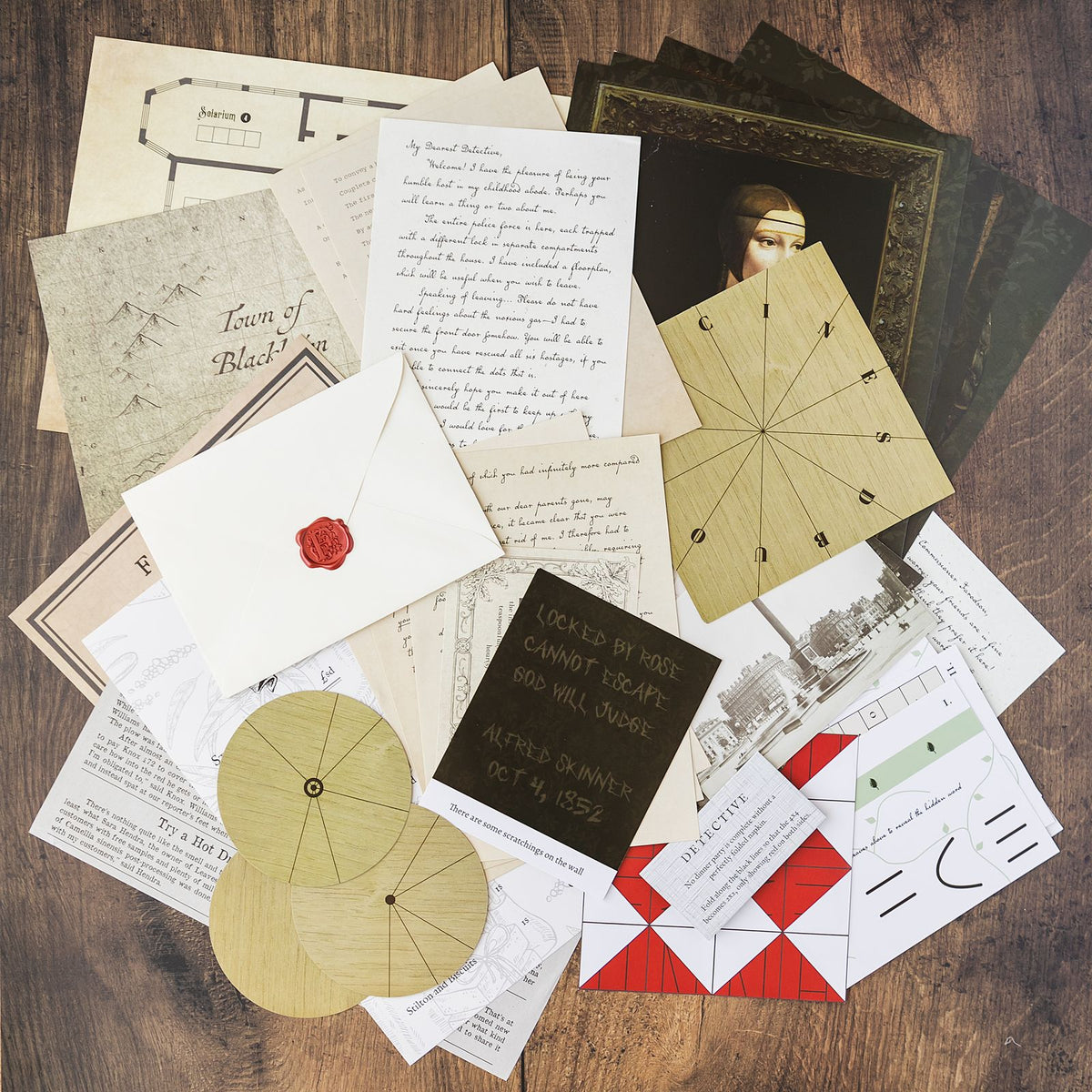
Quiet background music and a prop from the story can do a lot. A handwritten letter feels at home in a Victorian case; a strange invitation suits a science-fiction game. Keep decorations separate from puzzle materials unless they serve a purpose, so players can tell what needs their attention.
If you're playing one of our games, the matching game night guide has food and music ideas for its setting. Pick the suggestions you enjoy. You can still have a good evening with the box and a clear table.
Give everyone something to work on
Read the opening together, then spread out the available clues. Encourage people to share what they notice before someone settles on an answer. If one person has been holding the same document for a while, pass it around.
For a DIY game, test each puzzle on someone who hasn't seen it. Write a hint that points them toward the method and another that helps with the next step. During the game, offer those hints when the group wants them.
Choose a game and plan the evening around it
Down The Rabbit Hole is a good first game if you like the idea of finding your way through Wonderland. It takes 1.5 to 3+ hours for 1 to 6 players, ages 12+. The puzzles are introductory, and the online Companion Guide has hints and answer checking.
If your group wants a longer detective story, Blackbrim: 1876 gives you a case in Victorian England with 2 to 4+ hours of play across two parts, for 1 to 6 players, ages 14+. You can finish part one, put it away, and return to the case another evening.
Decide which story sounds fun, then check the game's page for the materials and play details. Once that's settled, you can spend the rest of your planning on who to invite and what to eat.