Murder mystery themes: 10 ideas for a night at home
For a first murder mystery night, a Prohibition speakeasy or country-house dinner gives guests an easy way into the story. A train offers a contained fictional setting for checking alibis. Below are ten themes, with clue ideas and advice on choosing between a character party and a cooperative puzzle game.
Decide which kind of night you are running
"Murder mystery" covers two evenings that have almost nothing in common. In the first, your guests are the suspects. Everyone gets a character sheet, one of them is the killer, and the entertainment comes from people performing. In the second, everyone at the table is on the same side, working through physical evidence toward an answer that nobody in the room knows yet. Most murder mystery party themes are written for the first format. Most boxed games, ours included, are built for the second.
The format affects which details you need. A carnival gives guests distinct roles for a character party. For a deduction game, you’ll also need records or clues that let them test each other’s stories.
Choose a character party if the group enjoys acting and improvising. For a quieter evening, choose a cooperative game where everyone examines the clues together. Check the chosen game’s player count before deciding how many people to invite.
Ten murder mystery themes, and what each one asks of you
The table suggests ways to use each setting. Your guest count and preparation time depend on the kit or mystery you choose. Writing and testing a complete mystery takes extra work beyond decorating the room.
| Theme | Suggested format | Clue idea | Plan ahead for | Optional extras |
|---|---|---|---|---|
| Prohibition speakeasy | Either | A ledger or coded invitation | Music and a few lamps | Optional hats or suspenders |
| Victorian London | Deduction | A telegram or train timetable | Printed documents | Optional aged-paper props |
| Country house dinner | Role-play | A floor plan and guest timeline | Dinner-table setting | Use the place settings you have |
| Film noir | Either | A witness statement or case file | Short scene introductions | Existing lamps can set the mood |
| Séance in a haunted house | Role-play | A message with a testable explanation | Clear rules for the supernatural | Optional battery candles |
| Frontier saloon | Role-play | A disputed deed or debt record | Character briefs and final accusations | Optional hats |
| Overnight train | Deduction | A carriage plan and ticket times | A consistent journey timeline | Paper clues can carry the setting |
| Archaeological dig | Deduction | Field notes and a site map | A supplied key for any unfamiliar script | Optional expedition props |
| Near-future tech company | Deduction | Access logs or a leaked memo | Clear rules for the technology | Use printouts or shared screens |
| Carnival sideshow | Role-play | A ticket record or missing-prize clue | Space for separate clue stations | Helpers may be useful for stations |
The Prohibition speakeasy
A hat, suspenders or a jazz playlist can suggest a 1920s speakeasy. A bootlegger, a club owner and an investigator give you characters with reasons to keep secrets. Use a debt, a missing shipment or an intercepted message to connect those motives to the clues.
Give quieter players useful information as well as the more talkative characters. If you’re writing your own party, let some clues be discovered in documents so acting is one way to contribute, not the only way.
For a simple setup, choose a playlist and a few lamps before guests arrive. A purchased kit will tell you what else to prepare. This is a practical first theme if your group likes the setting.
Our La Famiglia game uses a 1929 Chicago setting. You help the FBI bring down a mafia organization, with everyone solving together. It’s a crime adventure with codes and puzzles rather than a party where one guest plays the killer. It takes 2 to 4+ hours across two parts for 1 to 6 players, ages 14+, and has 4.8 stars from 99 reviews.

Victorian London
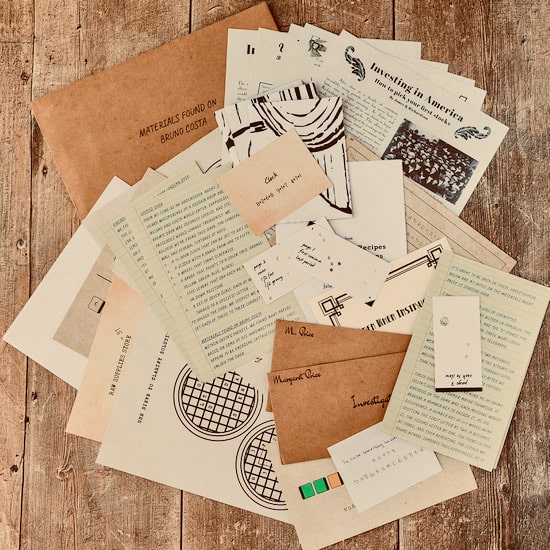
The period supplies its own mechanics. Telegrams, handwriting, train timetables, newspaper columns and calling cards are all physical objects a guest can pick up, and every one of them carries information without anybody having to deliver a line of dialogue out loud.
Keep the wording plain even when the props look old. Guests should be able to find the useful fact in a letter without working through several paragraphs of period dialogue.
Telegrams, newspaper columns and calling cards can establish the period without elaborate decoration. If you want to age the paper, make time for it to dry and check that every clue remains readable.
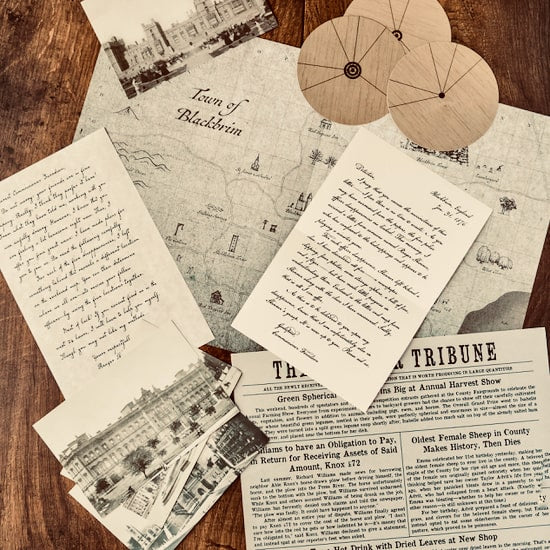
Blackbrim: 1876 puts you in a fictional Victorian town, following the criminal Reager Skinner as a private detective. Everyone works together, and nobody needs to act. It takes 2 to 4+ hours across two parts for 1 to 6 players, ages 14+, and has 4.8 stars from 524 reviews.

The country house dinner
A country house gives the fictional suspects a reason to be in one place. A storm or a broken telephone can explain why help cannot arrive immediately. The written timeline determines the alibis; guests can still step away from the real table for a drink.
The country-house setup gives you a contained cast of suspects. Draw a floor plan and write a timeline before adding the clues, so you can check where everyone was when the crime happened. Allow extra time to test the mystery after writing it.
Film noir
A narrator can introduce each scene in a few lines of noir-style dialogue. Keep the evidence in short case notes or witness statements, and use the lighting you already have. Allow separate time to write and test the mystery before planning its presentation.
Write the solution first, then work backward through the evidence. Players should be able to explain why their chosen suspect fits and why the alternatives do not. Include a final reveal or answer check so they know when they’ve solved the case.
The séance in a haunted house
A dim room and battery candles can suggest a séance. Keep enough light on the table to read the clues, and let guests know whether the evening includes horror or just a ghostly setting.
Decide how the supernatural works in your story. If a ghost can explain any missing clue, players have no way to test a theory.
Tell players which rules apply. You might make the ghost real but give it clear limits, or leave evidence that someone is faking the haunting. Whichever you choose, the explanation should follow from clues the players can find.
The frontier saloon
A frontier saloon gives a character party a shared meeting place. Debt records, a disputed deed or a missing payment can connect the suspects. Use the kit’s instructions to plan arrivals and breaks; the theme alone does not determine whether people can join late.
For a homemade game, ask each player to submit an accusation before the reveal. Written answers let everyone finish their reasoning before hearing the loudest theory in the room. If you’re using a kit, follow its own final-vote procedure.
The overnight train
An overnight train gives the story a contained setting and a natural timeline. A carriage plan, ticket details and station stops can help players check where each suspect could have been. Make sure the evidence supports a consistent journey before drawing the final props.
If you include a carriage diagram, give players a reason to use it. For example, a witness might have seen someone cross a particular compartment. Label purely decorative props so they do not become accidental distractions.
A puzzle whose answer is a location can make the map useful. Players might use the carriage layout to identify where a missing item was hidden.
The archaeological dig
An expedition gives you reasons to include field notes, survey photographs, supply lists and a site map. Choose only the pieces the mystery needs. More documents mean more writing and testing, even when the props are simple.
If you use an unfamiliar script, supply the key. Do the same for any specialist knowledge the puzzle needs. A player should be able to solve it from the information available, whether that comes on paper or through a clearly signposted online resource.
The near-future tech company
A whistleblower, a disputed invention or an acquisition can give a near-future company its conflict. Explain the relevant technology and relationships in the story so guests do not need industry knowledge to follow it.
An access log or leaked memo can be printed even when the story concerns software. If you use online evidence, make sure the group can share the screen or compare what they find. Choose the format that makes the clues easiest to discuss.
The carnival sideshow
A carnival gives you distinct places to put clues. A fortune teller’s tent, a ticket booth and a prize counter can become stations where small groups work separately, then compare their findings.
Give the characters ordinary motives, such as a wage dispute or an act someone stole. Their work supplies the setting; their choices and relationships supply the mystery.
Separate stations need room and may need helpers. Sketch the layout, decide how groups move between clues and test whether people can make progress at the same time. Keep the number of stations manageable for your space.
Three themes that need more planning
These settings can work, but each needs a little extra care when you’re writing the mystery. For a home party, use fictional crimes and characters.
The medieval castle
A medieval castle can mean more costume preparation. Make sure the clues do enough work too: letters, household records or a map can give players something to examine alongside spoken testimony.
The pirate ship
A pirate ship naturally suggests maps and hidden treasure. If you want a murder mystery, give players evidence that points to a culprit as well as locations to visit. Finding the next clue and testing an alibi are different tasks.
The space station
A space station needs clear rules for its technology. Tell players what the computer can control and what records they can trust. That keeps a technical fault from becoming an explanation for every unexplained event.
Murder mystery games you can buy and play at home
If you’d prefer to have the puzzles ready to play, a boxed game takes care of the story and materials. Our games use codes and physical clues, with everyone on the same side.
Our at-home escape room games include printed materials and an online companion guide for checking answers and taking hints. Most boxed games tell a story in two parts. You can pause whenever you like, and nothing requires cutting or writing on the materials, so you can pass them on after playing.
Where we would start, going by the theme you were drawn to above:
- 1929 Chicago and the speakeasy: La Famiglia, 4.8 stars from 99 reviews
- Victorian London: Blackbrim: 1876, 4.8 stars from 524 reviews
- Wartime thriller, Manhattan 1945: The Fifth Column, 4.9 stars from 152 reviews
- A whole weekend of it: The Blackbrim Trilogy, six parts, 10+ hours, 4.9 stars from 533 reviews
For a Victorian setting, see what comes in Blackbrim: 1876. It plays with 1 to 6 people, ages 14+, over 2 to 4+ hours across two parts. Its 524 reviews average 4.8 stars.
For a party where guests play suspects and one is the killer, choose a scripted kit. Night of Mystery makes that format, including options for larger groups. Check the exact cast size before buying.
If none of the settings above fits, we also make Cryptid, a lost expedition following the trail of your vanished uncle, Synapse, a near-future story about getting inside an event run by an AI company, and Down the Rabbit Hole, which is a trip through Wonderland and the shortest box we make at 1.5 to 3+ hours.
Five checks for a homemade mystery
If you’re writing your own evening, our escape room puzzle design guide explains the principles below. The DIY escape room walkthrough turns them into a step-by-step build.
- Give players a way to check an answer. A lock, a clear logical conclusion or a final reveal can confirm the solve. A four-digit answer fitting a four-digit field is a useful format clue, but does not prove the digits are correct.
- Supply the information needed to solve each puzzle. It can appear in printed clues or a clearly signposted online resource. Do not depend on private knowledge about the host or guests.
- Give searching a purpose. A hiding place can be part of a puzzle, but players need a fair reason to look there. Do not rely only on making a small clue hard to notice.
- Plan hints for each puzzle. If the group stops making progress, offer a nudge before frustration takes over.
- Vary the demands on the group. Mix shorter clues with more involved puzzles, and use feedback from a trial run to find points that need clearer instructions or hints.
Test the clues on someone who hasn’t seen the answers, and watch for long stretches without progress. If you want examples to solve first, try our free printable escape room puzzles.
Questions we get about murder mystery theme nights
There are five things worth settling before you send any invitations.
How many people do you need for a murder mystery theme night?
A character-party kit has a set cast size, so buy for the number of people attending. A cooperative deduction game can work solo or with a small group. Our boxed games are for 1 to 6 players.
How long does a murder mystery night take?
Use the playtime for the game or kit you choose and add time for food and introductions. Most of our boxed games take 2 to 4+ hours across two parts, which you can play on separate evenings.
Do guests have to dress up and act at a murder mystery night?
A character party usually asks guests to play roles, but costumes depend on the kit and your plans. A cooperative puzzle game does not require acting. Ask which format the group would enjoy before choosing.
Can two people do a murder mystery theme night?
Yes. Choose a game whose published player count includes two, such as a cooperative boxed mystery. A scripted party kit may need a larger cast, so check its requirements before buying.
What is the easiest murder mystery theme for a first-time host?
A Prohibition speakeasy is a practical first choice: a playlist and a few costume details establish the setting quickly. A country-house dinner also works with little decoration. Choose the one whose characters your guests would enjoy playing.
For a work event, our office murder mystery game-night guide covers the additional planning, including group size and how much acting people want to do.